
Lincoln Memorial Penny Value: 1959-2008 Price Guide
See what a 1959 to 2008 Lincoln Memorial penny is worth by year, why almost all of them are face value, and the two doubled die errors actually worth money.
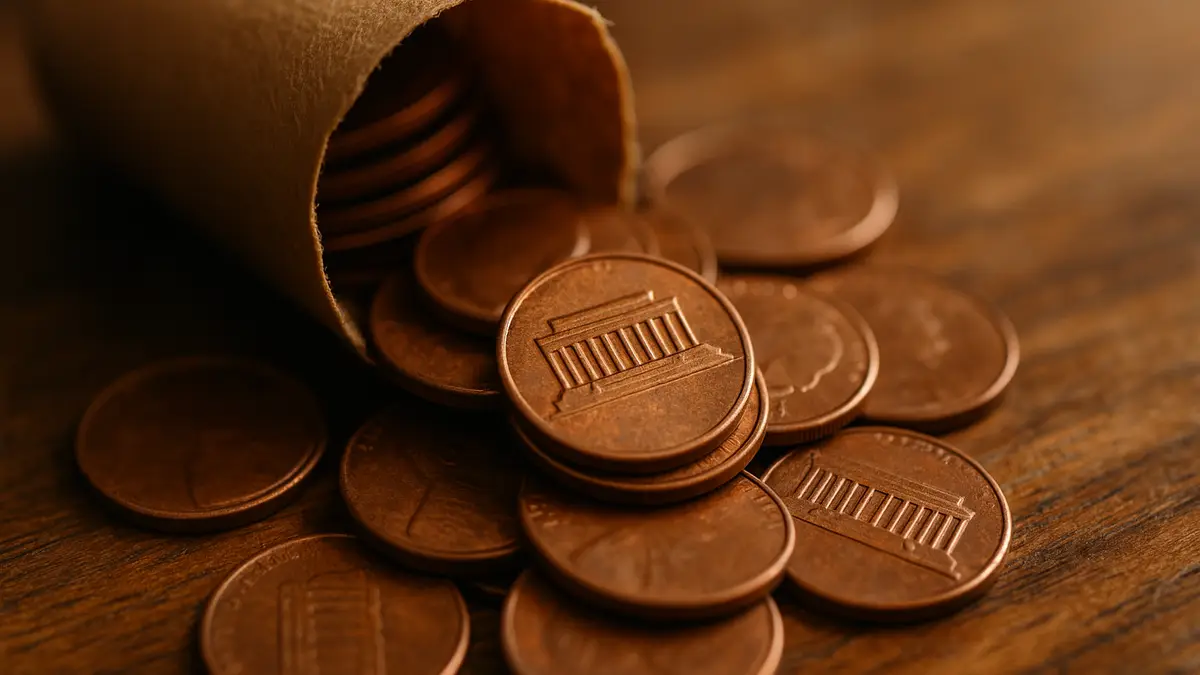
The Lincoln Memorial penny ran from 1959 to 2008, and it is the reverse design most people picture when they think of “an old penny,” which is exactly why so many people search a specific year hoping it is worth something. Almost every one of them is worth exactly what it says: one cent.
Is a Lincoln Memorial penny worth anything?
For nearly the entire run, no more than face value in circulated condition and only a small premium uncirculated. The Memorial design replaced the wheat-stalk reverse in 1959 and ran through 2008, and mintage numbers across that stretch were enormous, often well over a billion cents in a single year at a single mint. Huge mintage numbers keep a coin common no matter how many decades pass, which is the same principle that keeps most wheat pennies inexpensive too.
What is a 1964 penny worth?
This is the single most searched year in this range, almost certainly because of the 1964 quarter and 1964 Kennedy half dollar, both of which are genuinely 90% silver. The Lincoln cent shares none of that story. A 1964 penny was struck in the standard 95% copper bronze alloy used since long before the Memorial design, with no silver at any point, so it is worth face value to about $0.50 uncirculated, same as any other common date in this stretch.
What is a Memorial penny worth by year?
| Year(s) | Composition | Typical circulated | Typical uncirculated | Notable |
|---|---|---|---|---|
| 1959-1963 | Bronze (95% copper) | Face value | $0.10-$0.50 | First years of the Memorial reverse |
| 1964, 1963-D | Bronze | Face value | $0.10-$0.50 | No silver, despite the year |
| 1967-1969 | Bronze | Face value | $0.10-$0.50 | Common, high mintage |
| 1972 | Bronze | Face value-$0.10 | $0.25-$1 | Doubled die obverse exception exists |
| 1974 | Bronze | Face value | $0.10-$0.50 | Common |
| 1982 | Bronze or copper-plated zinc | Face value | $0.10-$0.50 | Transition year, both compositions exist |
| 1983-2008 | Copper-plated zinc | Face value | $0.05-$0.25 | Doubled die reverse exception in 1983 |
These are collector-market ranges, not investment advice, and the “notable” column is where any real money in this series actually lives.
Why did pennies switch from copper to zinc?
Copper prices rose enough by the early 1980s that the metal in a standard bronze cent approached, and briefly exceeded, one cent in raw material value, which made striking pennies at a loss a real concern for the mint. The response was a new composition: copper-plated zinc, at 2.50 grams instead of the old 3.11-gram bronze planchet, starting in 1982.
How do you tell if a 1982 penny is bronze or zinc?
1982 is the one year where both compositions exist side by side, since the changeover happened partway through the year rather than on January 1st. The reliable way to tell them apart is weight: a bronze 1982 cent weighs 3.11 grams, while a zinc 1982 cent weighs 2.50 grams. A basic digital gram scale settles it in seconds, and neither version carries a significant premium over the other for an average circulated coin. The composition is a fun identification detail more than a value driver here.
Are there any Memorial pennies actually worth real money?
Two, and both are doubled die errors rather than scarce dates. The 1972 doubled die obverse shows clear doubling in the date and the lettering above Lincoln’s portrait, and genuine examples can be worth well over $100 even in circulated condition. The 1983 doubled die reverse shows the doubling on the back of the coin instead, in the ONE CENT lettering, and carries similar real value when confirmed genuine.
Both are identified the same way: look for lettering or numerals that appear to have a distinct second, overlapping image rather than simple wear or machine doubling, which is a shallower, shelf-like effect that does not carry the same value. If a coin looks doubled, a loupe and a side-by-side comparison against a reference photo is the fastest way to decide whether it is worth a closer look from a dealer.
Does the mint mark matter on these common years?
Rarely, with one useful exception. Mint marks sit just below the date, the same spot used on wheat cents: no letter for Philadelphia through 1979, P starting in 1980, D for Denver, and S for San Francisco. San Francisco stopped striking cents for general circulation after 1974, continuing only as a proof-coin mint after that point. That means a genuine S-mint cent dated 1975 or later should never have entered circulation through ordinary spending, so one that turns up outside a proof set is worth a second look, less for guaranteed value and more because it is an unusual find worth confirming rather than dismissing.
Outside that one wrinkle, mint mark differences across 1959-2008 stay minor. Mintage volume at every facility ran high enough that no ordinary date-and-mint combination in this range creates real scarcity on its own.
How do you check a coin for doubling without special equipment?
A basic 5x or 10x jeweler’s loupe, the kind sold cheaply at any hobby shop, is enough to check for doubling on the date and lettering. Hold the coin under a strong, direct light and tilt it slightly while looking through the loupe; genuine doubling shows as a distinct second outline of the letters or numbers, with visible separation rather than a blurry or shelf-like edge. Machine doubling, a much more common and far less valuable effect caused by a loose die during striking, tends to look flat and shallow by comparison. When in doubt, compare against a clear reference photo of the specific doubled die variety before assuming a coin qualifies.
Where should you look next?
If your jar mixes wheat cents with Memorial cents, our wheat penny value by year guide covers the earlier 1909-1958 run, where genuine key dates and the 1943 steel cent actually change the math. Once you have sorted out anything unusual from this list, our guide to selling old coins covers where a doubled die error actually belongs versus where a roll of common cents does, since treating them the same way wastes the value in the one that matters.
Frequently asked questions
Quick answers to what readers ask us most
What is a 1964 penny worth?
Face value to about $0.50 in uncirculated condition. Unlike the 1964 quarter and half dollar, the Lincoln cent was never struck in silver, so the excitement around 1964 coins does not extend to the penny.
Is a 1969 or 1974 penny worth anything special?
No more than any other common Memorial-era date. Both years had large mintages and no silver content, so a typical circulated example is worth face value and an uncirculated one is worth a small premium at most.
What is a 1983 penny worth?
A common 1983 cent is worth face value, since it falls in the copper-plated zinc era. The one exception is the 1983 doubled die reverse variety, a genuine error worth substantially more, identified by visibly doubled lettering on the reverse under magnification.
Why did pennies stop being made of copper?
Rising copper prices in the early 1980s made the metal in a bronze cent worth close to or more than one cent, so the mint switched to cheaper copper-plated zinc starting in 1982. See our coin values guide for how metal content drives value across other US coins.