
1979 Dollar Coin Value: Susan B Anthony Price Guide
What a 1979 Susan B Anthony dollar is worth today, why it is not silver despite the gray color, and which mint mark actually carries a premium.
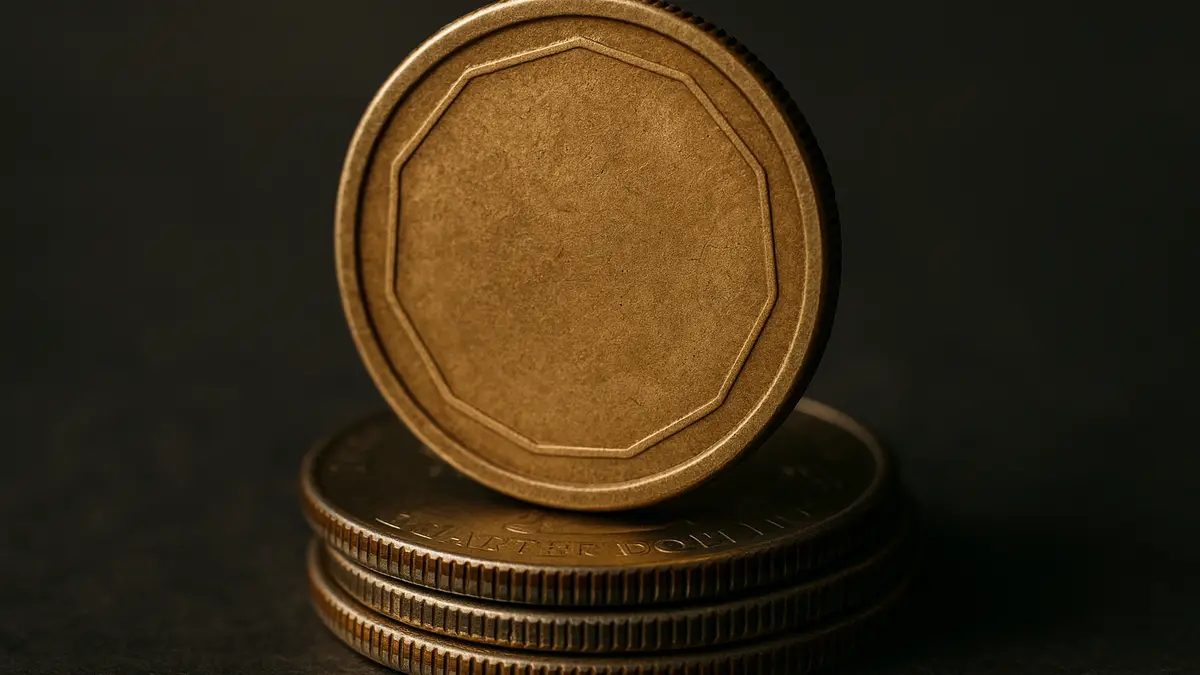
Find a 1979 dollar coin in a drawer and the first question is usually “is this silver?” It looks it: heavy, gray, and unfamiliar next to modern coins. It is not, and knowing that up front saves you from overvaluing a coin that is mostly worth face value.
What is a 1979 Susan B Anthony dollar?
A Susan B Anthony dollar is a copper-nickel clad US dollar coin issued 1979-1981 and again in 1999, the first US circulating coin to depict a named woman. It weighs about 8.1 grams and measures 26.5mm across, close enough to a quarter that early complaints about confusing the two led to a design change on the next dollar coin, the golden-colored Sacagawea dollar.
The giveaway detail is the eleven-sided inner border framing Anthony’s portrait and the eagle on the reverse. No US quarter has that border. Check for it before assuming a coin is “just a big quarter” or a rare silver strike.
Why do people call it a silver dollar?
Habit, mostly. Older Americans grew up with genuine 90% silver Morgan and Peace dollars, and the name stuck to any large dollar coin regardless of metal. The Anthony dollar is copper-nickel clad over a copper core, the same alloy used in dimes and quarters since 1965, with zero silver content. If you want a coin that actually carries silver weight, the Morgan and Peace dollar series and the Eisenhower dollar’s rare 40% silver proof sets are where to look instead.
What is a 1979 dollar coin worth?
Most 1979 Anthony dollars, from Philadelphia (no mint mark), Denver (D), or the common San Francisco proof, are worth face value to about $3 in circulated to lightly circulated condition. That is the honest collector-market range, not investment advice, and it holds whether the coin came from a bank roll or a jar of change.
| Type | Typical condition | Collector-market range |
|---|---|---|
| 1979-P or 1979-D, circulated | Well-worn, everyday use | Face value ($1) |
| 1979-P or 1979-D, uncirculated | No wear, original luster | $1-3 |
| 1979-S proof, Type 1 (filled S) | Proof set condition | $2-5 |
| 1979-S proof, Type 2 (clear S) | Proof set condition, scarce | Meaningful premium over Type 1, verify with a grading service |
What is the 1979-S clear mint mark variety?
The San Francisco Mint used two different mint mark punches on 1979 proof dollars partway through the year: an earlier version where the S appears slightly filled or blobby, and a later, clearer, sharper S. The clear-S proofs turned up in far fewer proof sets and collectors pay a real premium for verified examples. The catch is that the difference is subtle enough that only a third-party grading service like PCGS or NGC should be trusted to call it, since a misidentified common proof will not hold up to a buyer’s scrutiny.
Why was the Anthony dollar considered a failure?
The coin never caught on with the public the way the Mint hoped, mostly because of the size confusion with the quarter that its eleven-sided border was meant to solve but never fully did. Vending machine operators adopted it more enthusiastically than everyday consumers, since a dollar coin is more durable and cheaper to handle in a machine than a folded dollar bill, but general circulation demand stayed weak enough that the Mint stopped regular production after 1981, only revisiting the design once more in 1999 to bridge the gap before the golden-colored Sacagawea dollar arrived with a design specifically meant to avoid the same confusion.
Is a 1999 Susan B Anthony dollar worth more?
The Mint brought the design back briefly in 1999 to bridge the gap before the Sacagawea dollar launched, in both Philadelphia and Denver business strikes plus a San Francisco proof. Values sit in a similar range to 1979 issues: mostly a dollar or two above face for circulated coins, with the proof commanding a modest premium. Neither year has a dramatic rarity the way some early-date wheat pennies or key-date nickels do.
Where does the value actually come from?
Almost none of it comes from metal. A copper-nickel clad dollar has no meltable precious metal, so unlike a pre-1965 silver quarter or dime, there is no floor value tied to a spot price. What little premium exists is entirely collector demand for uncirculated condition and, on the 1979-S, for the correct mint mark variety.
That makes an Anthony dollar a poor candidate for a big payday and a fine one for a beginner collector: cheap to acquire in quantity, genuinely part of US coinage history, and an easy way to practice spotting die varieties before moving to pricier series.
What should you do with a jar of 1979 dollars?
Sort them by mint mark and look closely at any San Francisco proofs under strong light for the S style. Everything else is worth pulling out of circulation for a small profit over face value at best, or simply spending, since banks still accept them at face. If you find a genuine clear-S proof or anything that looks unusual, our guide to selling old coins covers where a variety like that actually finds a buyer willing to pay the premium, rather than a general coin jar getting lumped in with common dates on a marketplace listing nobody bids on.
Frequently asked questions
Quick answers to what readers ask us most
Is a 1979 dollar coin real silver?
No. Every Susan B Anthony dollar, including 1979 strikes, is copper-nickel clad over a pure copper core. The gray color and heft make people call it a silver dollar, but it has zero silver content. For coins that actually carry silver, see our Morgan and Peace dollar guide.
How can I tell a 1979 Susan B Anthony dollar from a quarter?
Check the edge and the border around the portrait. The Anthony dollar has an eleven-sided inner border ringing the design, a detail no quarter has, plus a plain unreeded edge on most strikes. Size alone is not reliable since the two coins are close in diameter.
What makes a 1979-S dollar worth more than others?
The mint mark style. San Francisco used two different S punches on 1979 proof dollars that year, an early filled-in version and a later clear, sharp version. The clear-S proofs are the scarce ones and sell for meaningfully more, but only a grading service can reliably tell the two apart.
Should I get my 1979 dollar graded?
Only if you suspect a clear-S proof or notice unusual doubling or an off-metal look. Ordinary circulated 1979-P or 1979-D dollars are worth a dollar or two above face value, not enough to justify grading fees. Our grading basics guide explains when submission actually pays off.