
1971-1978 Eisenhower Dollar Value: Is Yours Silver?
Most Eisenhower dollars from 1971-1978, including 1972, are clad with no silver. See what they are worth and how to spot the rarer 40% silver collector versions.
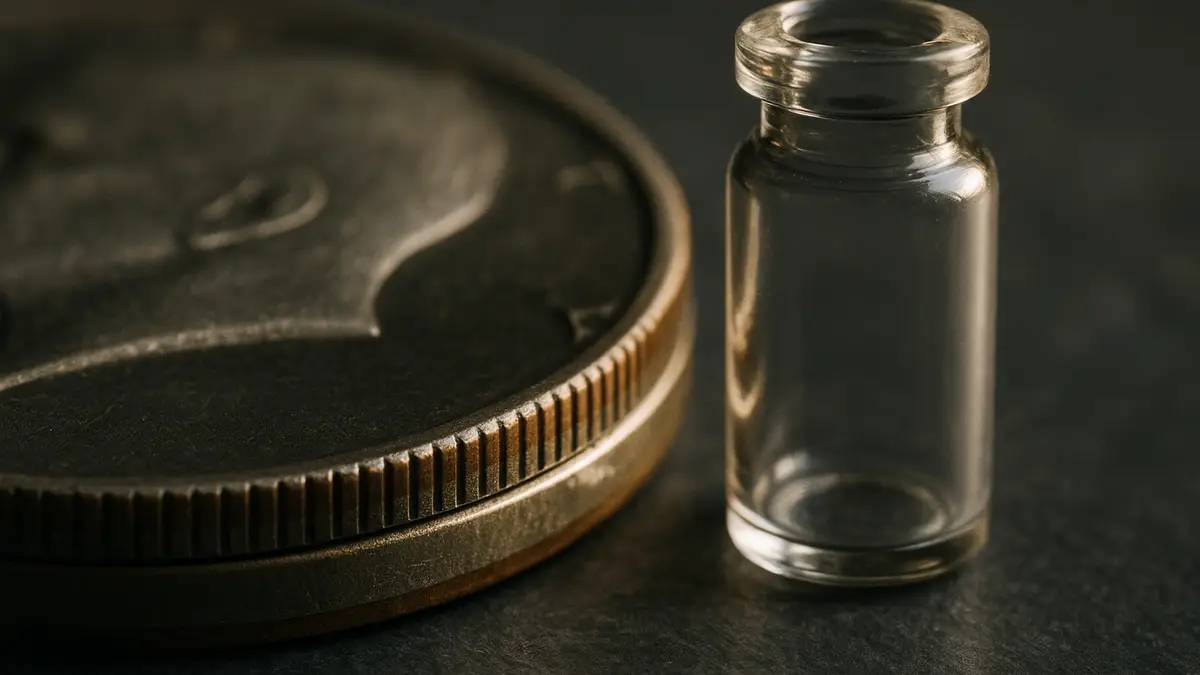
The Eisenhower dollar is the large, heavy dollar coin most people picture when they imagine an old “silver dollar,” and that mental image is exactly why the 1972 version gets searched so often. Almost none of them are actually silver.
Is a 1971-1978 Eisenhower dollar silver?
No, not the ones you are likely to find in change, a drawer, or an old collection someone spent normally. The vast majority of Eisenhower dollars from every year in the series, 1971 through 1978, are copper-nickel clad with no silver content at all, the same composition used on quarters, dimes, and half dollars from this era. A separate, much smaller run was struck in 40% silver exclusively at the San Francisco mint, sold directly to collectors in sealed proof and uncirculated sets, and never released for general circulation.
What is a 1972 silver dollar worth?
Strictly speaking, there is no such thing as a circulating “1972 silver dollar.” What most people mean by that search is the large dollar coin dated 1972, which is almost certainly the standard clad Eisenhower dollar, worth face value to $2-$3. If what you actually have came from an original 1972-S proof or uncirculated set and still carries that context, it may be the genuine 40% silver version instead, which is worth meaningfully more, roughly $10-$20 depending on condition.
What is an Eisenhower dollar worth by composition?
| Composition | Mint | Typical value |
|---|---|---|
| Copper-nickel clad (most common) | Philadelphia, Denver, San Francisco | Face value-$2-$3 |
| 40% silver-clad (collector sets only) | San Francisco only | $10-$20 |
These are collector-market ranges based on silver near $28-$30 per ounce for the silver version, not investment advice. As with the bicentennial coins from this same series, the complete original packaging adds to what a silver Eisenhower dollar brings over a loose, unpackaged example.
How do you tell a clad Eisenhower dollar from a silver one?
Start with the mint mark and the packaging, since those are the most reliable clues. Only San Francisco struck the 40% silver version, and only as part of sealed collector sets, never for circulation. A loose Eisenhower dollar with a D (Denver) or no mint mark (Philadelphia) is always the clad version. If you have an S-mint coin, check whether it still has, or clearly came from, its original government packaging before assuming it is silver.
Weight settles any remaining doubt. A copper-nickel clad Eisenhower dollar weighs 22.68 grams. The 40% silver-clad version weighs 24.59 grams, a difference large enough to catch on a basic digital gram scale.
Are there other 1972 varieties worth checking?
Yes, though this one has nothing to do with silver. Philadelphia struck the 1972 Eisenhower dollar using three different reverse dies, distinguished by how much relief, or three-dimensional depth, the Earth design shows on the reverse. One of those three varieties is recognized among collectors as genuinely scarcer and more valuable than the other two, independent of the coin’s composition. Identifying it requires comparing the Earth’s outline and the visibility of certain landmasses against reference images rather than checking a mint mark, so if a 1972 dollar looks unusually well struck or detailed on the reverse, it is worth a closer look before assuming it is an ordinary common date.
Why does the Eisenhower dollar look the way it does?
The obverse shows President Eisenhower’s portrait, and the standard reverse shows an eagle landing on the moon, a design drawn from the Apollo 11 mission emblem rather than a traditional heraldic eagle. It was the first US dollar coin to honor a deceased president since the series began, and it replaced the smaller silver dollars that had not been struck for general circulation since the 1930s.
Why are Eisenhower dollars less common in circulation than you would expect?
Despite the large mintages behind the clad version, Eisenhower dollars rarely show up in everyday change today. The coin was large and heavy compared to paper currency of the same value, and most people simply preferred a dollar bill for day-to-day spending, so a large share of the mintage ended up sitting in bank vaults, mint sets, and drawers rather than circulating repeatedly the way a quarter does. That is part of why an Eisenhower dollar pulled from an inherited collection or a coin jar often looks lightly worn or even uncirculated, even though it is not scarce in the collector sense.
How does this compare to a Morgan or Peace silver dollar?
An Eisenhower dollar, even the genuine 40% silver version, carries far less silver than a Morgan or Peace dollar, which are 90% silver and contain more than three times the pure silver content per coin. If your goal is finding actual silver value in a stack of large dollar coins, our silver dollar value by year guide and Morgan dollar melt value guide cover where that value is concentrated, and our silver melt value calculator turns any confirmed silver content into a current dollar figure using today’s spot price.
What should you do with an Eisenhower dollar?
Check the mint mark and packaging first, weigh it if there is any doubt, and treat a plain clad example as a $1 to $3 coin rather than a rare find. If it does turn out to be the genuine silver version or an unusual 1972 variety, get a second opinion from a dealer before pricing it, since both are easy to misidentify without a direct comparison.
Frequently asked questions
Quick answers to what readers ask us most
What is a 1972 silver dollar worth?
There is no true circulating silver dollar from 1972. A common clad Eisenhower dollar from that year is worth face value to $2-$3. Only the separate 40% silver version, sold in sealed collector sets from San Francisco, carries real silver value, generally $10-$20.
Is a 1971 dollar coin worth anything?
A standard clad 1971 Eisenhower dollar is worth face value to $2-$3, the same as most other years in the series. It is only worth more if it is the 40% silver San Francisco version from an original proof or uncirculated set.
How can I tell if my Eisenhower dollar is silver?
Check for an S mint mark and original collector-set packaging first, since silver versions were sold only that way. Weight confirms it: a silver-clad Eisenhower dollar weighs 24.59 grams, versus 22.68 grams for the ordinary copper-nickel clad version.
Why does the 1972 Eisenhower dollar have different varieties?
Philadelphia struck the 1972 dollar with three distinct reverse dies showing different levels of relief on the Earth design, and one of them is recognized as genuinely scarcer than the other two. See our coin values guide for how to weigh varieties like this against a simple date-and-mint lookup.