
Nickel Value by Year: What Old Nickels Are Worth
Most old nickels are worth face value, but 1942-1945 war nickels are 35% silver. See what a 1940, 1941, 1946, 1947, or 1964 nickel is really worth.
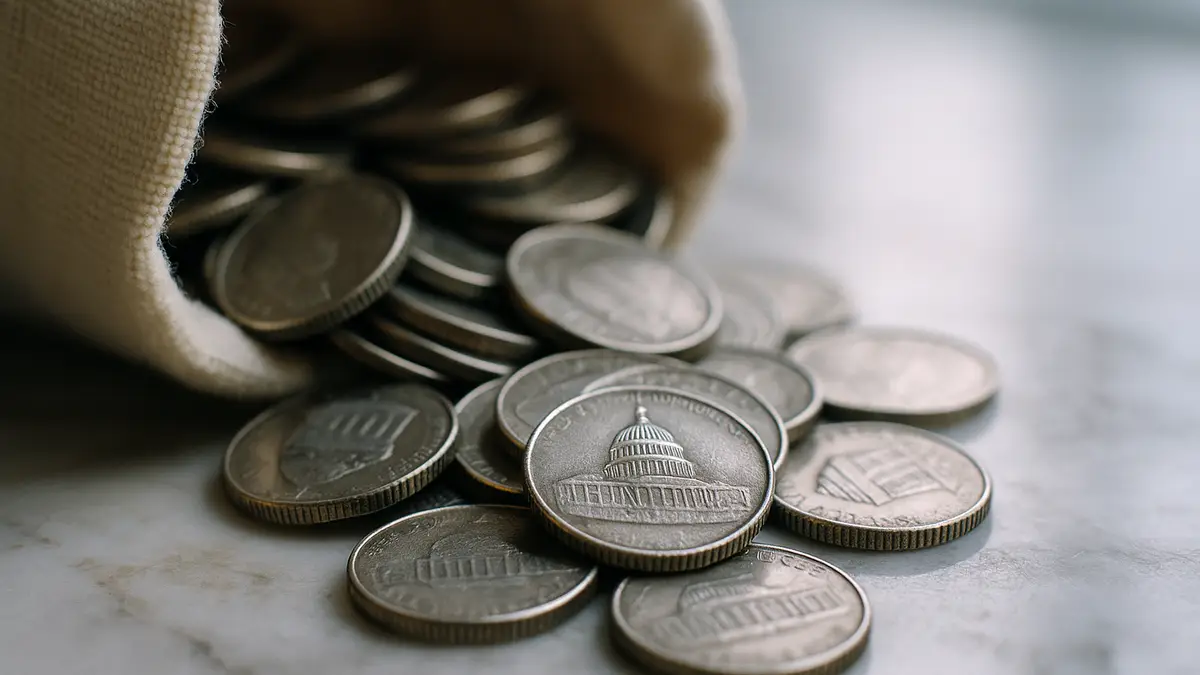
Nickels get overlooked next to their silver-content cousins, and for most years that instinct is correct: a nickel is worth a nickel. Four years break that pattern completely, and knowing how to spot them takes about five seconds once you know where to look.
How much is a nickel worth?
Five cents, for almost every Jefferson nickel you will ever find. Unlike dimes, quarters, and half dollars, the Jefferson nickel was never struck in a silver-heavy standard composition for general circulation, so age alone does not create the same value floor it does for other denominations. The one exception, covered below, is a specific four-year wartime stretch where the mint temporarily used silver instead of nickel.
Are Jefferson nickels ever silver?
Yes, but only from 1942 through 1945. Nickel, the metal, was needed for wartime steel production, so the mint replaced the standard copper-nickel alloy with a 35% silver blend for those four years. A war nickel weighs 5.00 grams, the same as any other Jefferson nickel, and contains 0.0563 troy ounces of pure silver.
The easiest way to spot one does not require a scale. War nickels carry a large mint mark, P, D, or S, positioned directly above Monticello’s dome on the reverse, noticeably bigger and in a different spot than the small mint mark used on every other year. That P is worth noticing on its own: it marked the first time in US coinage history that a Philadelphia-struck coin carried a mint mark at all, since Philadelphia coins otherwise went unmarked for decades before and after.
What is a nickel worth by year?
| Years | Composition | Typical circulated value | Typical uncirculated value |
|---|---|---|---|
| 1938-1941 | Copper-nickel, no silver | Face value | $0.25-$0.50 |
| 1942-1945 | 35% silver (large mint mark above dome) | $1-$2, melt-driven | $2-$4 |
| 1946-1963 | Copper-nickel, no silver | Face value | $0.25-$0.50 |
| 1964 | Copper-nickel, no silver | Face value | $0.25-$0.50 |
| 1965-1967 | Copper-nickel, no silver, no mint mark | Face value | $0.25-$0.50 |
| 1968-present | Copper-nickel, no silver | Face value | Face value-$0.25 |
These are collector-market ranges based on silver near $28-$30 per ounce for the war years, not investment advice. For an exact melt value on a war nickel today, use our silver melt value calculator.
What is a 1964 nickel worth?
Face value in almost every case, and this is worth stating clearly since 1964 gets searched constantly because of the genuinely silver 1964 quarter and half dollar from the same year. The nickel does not share that story. A 1964 Jefferson nickel is standard copper-nickel with no silver at all, worth face value to about $0.50 uncirculated, same as most other common-date years.
What is a 1940 or 1941 nickel worth?
Both are ordinary prewar Jefferson nickels, common and worth face value to roughly $0.50 in uncirculated condition. Neither year carries a recognized key date or major error, so condition is the only thing that moves a coin from one end of that range to the other.
What is a 1946 or 1947 nickel worth?
The same story as 1940 and 1941, just on the other side of the war years. Once the mint returned to standard copper-nickel composition after 1945, nickels went back to being a face-value coin with only a small uncirculated premium, and 1946 and 1947 both fall squarely into that common pattern.
What is a 1939 nickel worth?
Like 1940 and 1941, a 1939 nickel is a common prewar Jefferson nickel with no silver, worth face value to about $0.50 in uncirculated condition. It sits just outside the war-nickel window, so the large-mint-mark test does not apply to it, and there is no recognized key date for 1939 that would push it above the ordinary common-date range.
Can you double-check a war nickel with a scale instead of the mint mark?
Not by weight. A 35% silver war nickel weighs 5.00 grams, the same as an ordinary copper-nickel Jefferson nickel, so a scale will not separate the two. Silver also tones differently than copper-nickel over time, often taking on a duller or slightly golden-gray cast next to the brighter, whiter surface of a standard nickel, which some collectors use as a secondary clue. That visual difference is subtle and not something to rely on by itself, so lean on the date range and the large mint mark above the dome as the real confirmation.
Does the 1965-1967 no-mint-mark gap apply to nickels too?
Yes. The mint suspended mint marks across every denomination, not just quarters, from 1965 through 1967, so nickels from those three years carry no mint mark regardless of which facility struck them. That is the same gap covered in more detail in our mint marks guide, which explains how to read mint marks correctly once they resume in 1968 and why a missing letter on a coin from this specific window does not mean anything unusual.
Where should you look next?
If nickels are turning up alongside older 5-cent coins with a bison on the reverse, those are a different series entirely; our buffalo nickel value by year guide covers 1913-1938 in full, including its own key dates and dateless-coin problem. Once you have sorted war nickels from common ones, our guide to selling old coins covers the fastest realistic way to convert a stack of silver war nickels into cash near melt value.
Frequently asked questions
Quick answers to what readers ask us most
How much is a nickel worth?
Face value, five cents, for the vast majority of Jefferson nickels in circulated condition. The main exception is 1942-1945 war nickels, which contain 35% silver and are worth several times face value based on that metal content alone.
What is a 1964 nickel worth?
Face value to about $0.50 uncirculated. Jefferson nickels were never struck in silver outside the 1942-1945 war years, so despite the same-year silver quarters and half dollars getting attention, a 1964 nickel carries no silver at all.
How do I know if my nickel is a silver war nickel?
Check the reverse. War nickels from 1942 to 1945 show a large mint mark, P, D, or S, positioned above Monticello's dome, which is much bigger and placed differently than the mint mark on any other Jefferson nickel year.
What is a 1940 or 1946 nickel worth?
Both are common, standard copper-nickel Jefferson nickels with no silver, worth face value to about $0.50 in uncirculated condition. 1940 is prewar and 1946 is the first postwar year after the silver alloy ended, but both price the same.