
1965-1967 Quarter Value: Silver-to-Clad Transition
1965, 1966, and 1967 quarters have no mint mark and no silver. See why the mint dropped mint marks those years and what these common clad quarters are worth.
Three years sit right in the middle of one of the biggest changes in US coinage, and they cause more confusion than almost any other date range on this site. A 1965, 1966, or 1967 quarter looks like it should follow the same rules as 1964, but it does not, starting with the mint mark.
Why do 1965-1967 quarters have no mint mark?
The US Mint suspended mint marks across every denomination from 1965 through 1967, not just quarters, as part of the transition away from silver coinage. The goal was to discourage speculators from sorting and hoarding coins by which mint struck them while the changeover was underway. Mint marks returned to circulating coinage starting in 1968, which means these three years are the only gap of their kind in modern US coin history.
That gap matters for identification. A quarter with no visible mint mark could be a 90% silver 1964 or earlier issue, or it could be a clad 1965, 1966, or 1967 issue with no silver at all. The date on the coin, not the missing letter, is what actually tells you which one you have.
Is a 1965, 1966, or 1967 quarter silver?
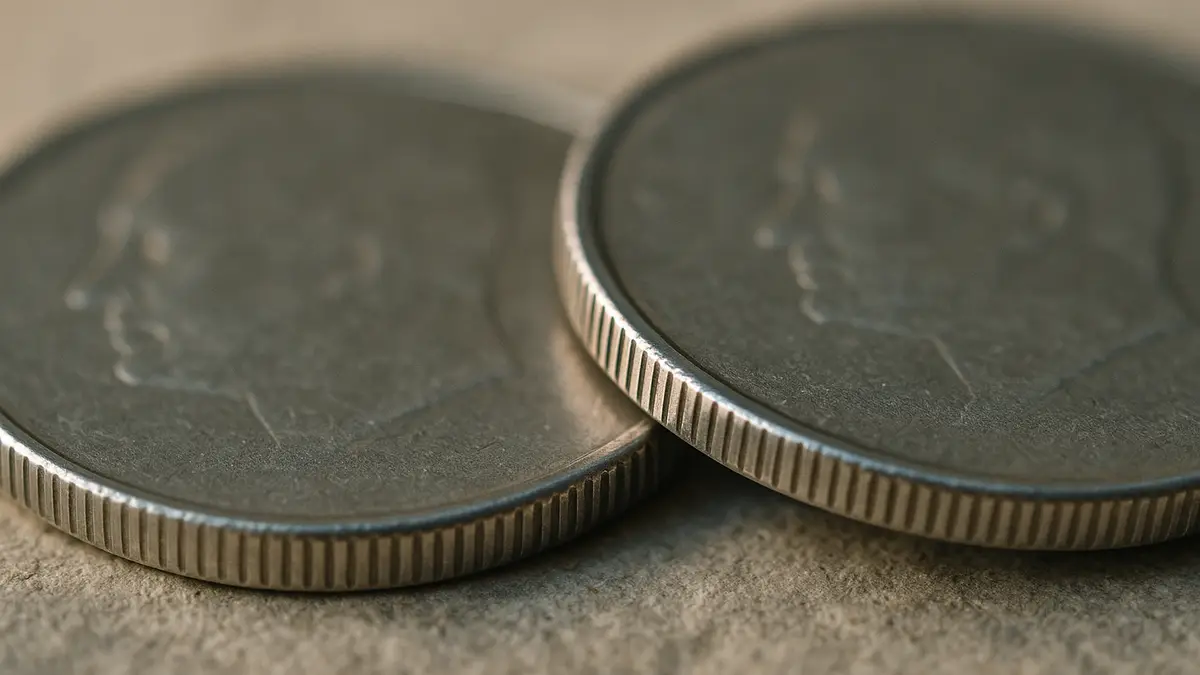
No. Every quarter dated 1965 through 1967 is copper-nickel clad, the same composition used from 1965 onward with no exceptions for these three years specifically. You can confirm this the same way you would check a 1964 quarter: look at the edge for a visible copper-colored stripe, which appears on every clad coin and never on a solid 90% silver one, or weigh it. A clad quarter weighs 5.670 grams, noticeably less than the 6.25 grams of a silver quarter.
What is a 1965-1967 quarter worth?
| Year | Composition | Circulated | Uncirculated |
|---|---|---|---|
| 1965 | Clad, no silver | Face value-$0.25 | $0.50-$2 |
| 1966 | Clad, no silver | Face value-$0.25 | $0.50-$2 |
| 1967 | Clad, no silver | Face value-$0.25 | $0.50-$2 |
These are collector-market ranges, not investment advice. All three years were struck in very large numbers, so an ordinary example from any of them is common in any grade short of a top-tier uncirculated specimen with exceptional strike quality.
Why were so many quarters struck during these three years?
The answer traces back to silver prices. As silver became worth more relative to a quarter’s face value in the early-to-mid 1960s, people began pulling silver dimes, quarters, and half dollars out of circulation to save or sell, which created a genuine shortage of circulating coins. The mint responded by striking clad quarters, dimes, and (from 1965) 40% silver-clad half dollars in unusually large volumes during 1965, 1966, and 1967 to keep enough coins moving through the economy. That production surge is the direct reason these three years remain so common today.
Does the same no-mint-mark gap apply to other denominations?
Yes. Dimes, nickels, and half dollars struck during 1965-1967 also carry no mint mark, which is the same identification wrinkle that shows up on nickels from this window. Our mint marks guide covers how mint marks work across the full range of US denominations, including exactly which years and coins fall into this gap and how to read a mint mark correctly once they return in 1968.
How does this compare to the 1964 quarter?
If you are trying to sort a jar that spans this transition, our 1964 quarter value guide covers the last silver year in detail, including the edge and weight tests that work the same way here. Side by side, the two guides cover the entire silver-to-clad story: one year of real silver value immediately followed by three years of high-volume clad coins with none.
What are Special Mint Set quarters from this era?
Along with suspending mint marks, the mint also paused its usual proof coin program during 1965, 1966, and 1967 and replaced it with Special Mint Sets, sold directly to collectors. Coins from these sets were struck with more care than ordinary circulation strikes, giving them sharper detail and better surfaces than a typical coin pulled from a bank roll, though still short of true proof quality. A 1965-1967 quarter from an original Special Mint Set generally sits above the ordinary uncirculated range in this guide, since the better strike and the intact original packaging both add to what a collector will pay for it.
If you are not sure whether a quarter came from one of these sets, check for signs it was never in circulation at all: no scratches from other coins, sharp full detail on the design, and ideally the original mint packaging or holder still with it. A loose quarter with any handling wear, even light wear, is priced as an ordinary circulation strike regardless of the year, so check condition carefully before assuming a coin belongs in the higher bracket.
What should you do with a 1965-1967 quarter?
Since these are common clad coins with no silver floor, condition is the only thing that can push one above face value, and only in genuinely well-preserved uncirculated grades. If sorting turns up a mix of silver 1964-and-earlier coins alongside these clad ones, keep them separate; they sell through different channels and at very different prices. Our guide to selling old coins covers how to handle a mixed group without treating a silver coin and a clad one the same way.
Frequently asked questions
Quick answers to what readers ask us most
Is a 1965 quarter worth anything?
A common 1965 quarter is worth face value to about $0.25 circulated, since it is copper-nickel clad with no silver. Uncirculated examples can bring $0.50 to $2. It is common because the mint struck enormous quantities that year to relieve a coin shortage.
Why does my 1966 or 1967 quarter have no mint mark?
The US Mint suspended mint marks on all denominations from 1965 through 1967, regardless of which facility struck the coin, to discourage speculators from hoarding coins by mint during the silver-to-clad transition. Mint marks returned starting in 1968.
Is a quarter with no mint mark always silver?
No. A no-mint-mark quarter dated 1964 or earlier is 90% silver, but a no-mint-mark quarter dated 1965, 1966, or 1967 is clad with no silver at all. The date, not the missing mint mark, is what tells you the composition.
Why were so many quarters made in 1965, 1966, and 1967?
Rising silver prices led people to pull silver coins out of circulation and hoard them, causing a real coin shortage. The mint ramped up production of the new clad quarters, dimes, and halves during these years specifically to fill that gap.