
1964 Quarter Value: What Yours Is Really Worth Today
A 1964 quarter is 90% silver, the last year before the switch to clad. See how to confirm it, what it is worth in circulated and uncirculated grades, and why.
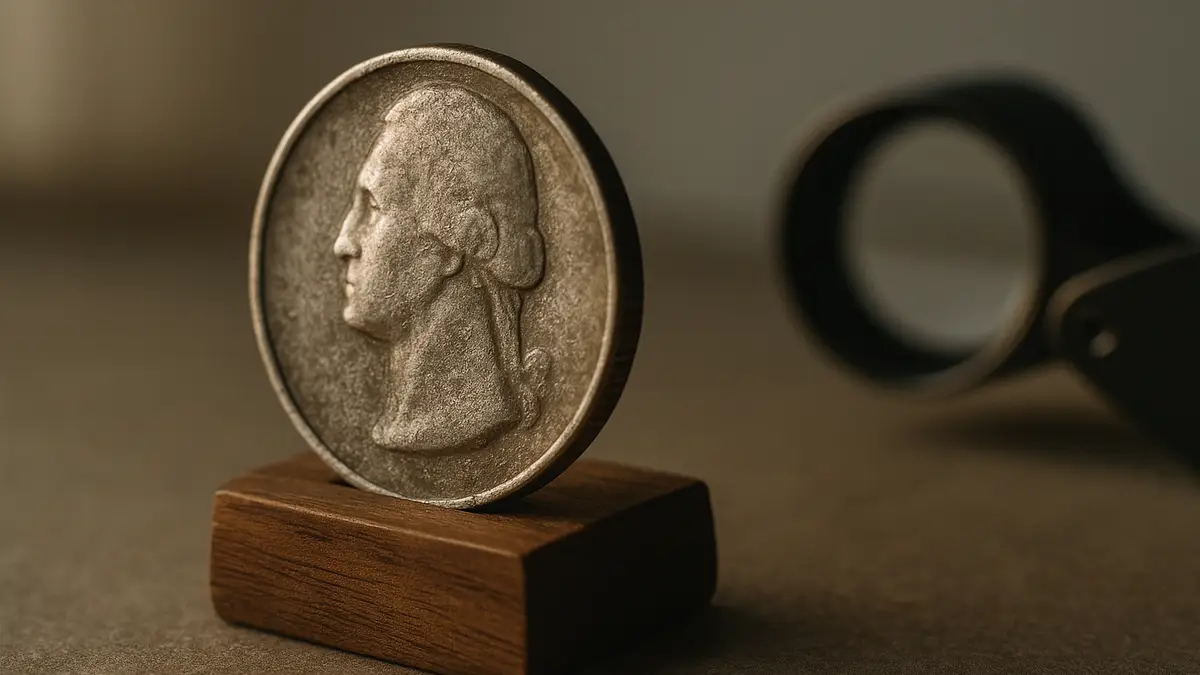
Every jar of old change eventually turns up a 1964 quarter, and it is worth pausing on, because 1964 is the exact cutoff year. One year earlier or one year later changes the coin’s value by a wide margin, so getting the identification right matters more than usual here.
Is a 1964 quarter silver?
Yes. Every Washington quarter dated 1964 or earlier struck for circulation is 90% silver, and 1964 is the final year of that composition before the US Mint switched to a copper-nickel clad sandwich in 1965. A 1964 quarter weighs 6.25 grams total, and the pure silver content works out to 0.1808 troy ounces per coin.
That silver content is the coin’s value floor. No matter how worn a 1964 quarter is, it is worth at least its metal content, which moves with the spot price of silver day to day.
How can you tell if your 1964 quarter is silver?
Two quick checks confirm it without any tools beyond a scale.
Edge color. A 90% silver quarter has a solid, uniform silver-gray edge all the way around. A clad quarter from 1965 or later shows a visible copper-colored stripe running through the middle of the edge, where the pure copper core is sandwiched between two outer layers.
Weight. A silver quarter weighs 6.25 grams. A clad quarter weighs 5.670 grams. That 0.58 gram difference is easy to catch on a basic digital gram scale, which is a more reliable test than eyeballing color under indoor lighting.
What is a 1964 quarter worth today?
The table below separates the metal floor from typical collector-market ranges by condition, assuming silver near $28-30 per troy ounce. These are estimates, not investment advice or a guaranteed sale price.
| Condition | What it means | Typical value |
|---|---|---|
| Heavily worn (Good to Fine) | Design details flattened, rim mostly intact | Near melt, about $5-6 |
| Moderate wear (Fine to Extremely Fine) | Most details visible, moderate flattening | $3-5 |
| Light wear (About Uncirculated) | Trace of wear on the highest points only | $6-9 |
| Uncirculated (Mint State) | No wear, full original luster | $8-15 |
For an exact number instead of a range, run the coin through our silver melt value calculator, which uses the current spot price rather than an assumption baked into a static table.
Does the mint mark change the value?
Only slightly, and it is easy to overrate. 1964 quarters were struck at Philadelphia (no mint mark, found just above the date range on the reverse near the eagle) and at Denver (a small D in the same spot). Both facilities produced enormous quantities of quarters that year, so for an average circulated coin, condition is what moves the price, not which mint struck it.
Where mint mark differences matter more is on later, lower-mintage dates in the same series. Our silver quarters and dimes value guide covers the wider Washington quarter silver era and where genuine mint mark scarcity actually shows up.
What about proof 1964 quarters?
Proof coins from this era were struck at Philadelphia in noticeably smaller numbers than circulation strikes and typically show sharper design details and mirror-like fields. A 1964 proof quarter generally carries a modest premium over a circulated example, but do not assume every shiny coin is a proof. Uncirculated coins that simply avoided wear can also show strong luster without being proof strikes. If you are unsure which you have, a local coin shop or a certification service can confirm it before you price it as one.
Why did 1964 become the cutoff year?
Rising silver prices in the early 1960s made the metal in silver dimes, quarters, and half dollars worth approaching, and eventually exceeding, the coin’s face value, which encouraged people to pull silver coins out of circulation and hoard them. Congress responded with the Coinage Act of 1965, which replaced silver with a copper-nickel clad sandwich for dimes and quarters starting that year. Some 1964-dated quarters were actually struck into 1965 before mint equipment fully converted, but the composition standard is defined by the date on the coin, not the exact strike date, so any quarter reading “1964” is silver regardless of when it left the mint. The 1965-1967 quarter years that followed capture that transition directly and are worth checking on their own.
How should you store a silver quarter once you have identified it?
Keep it out of a pocket or a jar where it can rub against other coins, since that friction wears down detail and lowers an otherwise nice coin into a lower condition bracket. A simple 2x2 cardboard flip or a coin capsule protects the surface for next to nothing. Avoid cleaning it. Cleaning a silver coin, even gently, typically leaves fine scratches that a buyer or grading service can spot immediately, and it usually lowers the value rather than improving it. If a coin looks dirty, leave the dirt; a knowledgeable buyer will price the coin correctly either way, and a stripped, shiny surface reads as damage rather than quality.
What should you do next with a 1964 quarter?
Start with our US coin values guide if you want to compare the 1964 quarter against other coins in the same jar, since silver content pages tend to travel together. If your coin turns out to be a common circulated example, the fastest realistic outcome is selling it near melt value; our guide to selling old coins compares eBay, local dealers, and coin shows so you are not leaving money on the table by taking the first offer.
Frequently asked questions
Quick answers to what readers ask us most
Is a 1964 quarter really worth more than a 1965 quarter?
Yes, by design rather than accident. The US Mint switched Washington quarters from 90% silver to a copper-nickel clad composition starting in 1965, so 1964 is the final year of silver quarters and every date after it carries no silver value at all.
How much silver is in a 1964 quarter?
A 1964 quarter weighs 6.25 grams and is 90% silver by weight, which works out to 0.1808 troy ounces of pure silver. Multiply that figure by the current spot price of silver, or use our silver melt value calculator, to get today's metal floor.
Does the D mint mark make a 1964 quarter worth more?
Not meaningfully for an average circulated example. Both the Philadelphia (no mint mark) and Denver (D) strikes from 1964 were produced in very large numbers, so condition drives the price far more than the mint mark does for this particular date.
What is the fastest way to check if a quarter is silver?
Look at the edge. A 90% silver quarter shows a solid silver-gray edge, while every clad quarter from 1965 onward shows a thin copper-colored stripe running around the edge where the copper core is exposed between the outer layers.