
1976 Bicentennial Coin Value: Quarter, Half and Dollar
Bicentennial quarters, halves, and dollars are dated 1776-1976 and mostly common. See what the clad versions are worth and how to spot the rarer silver sets.
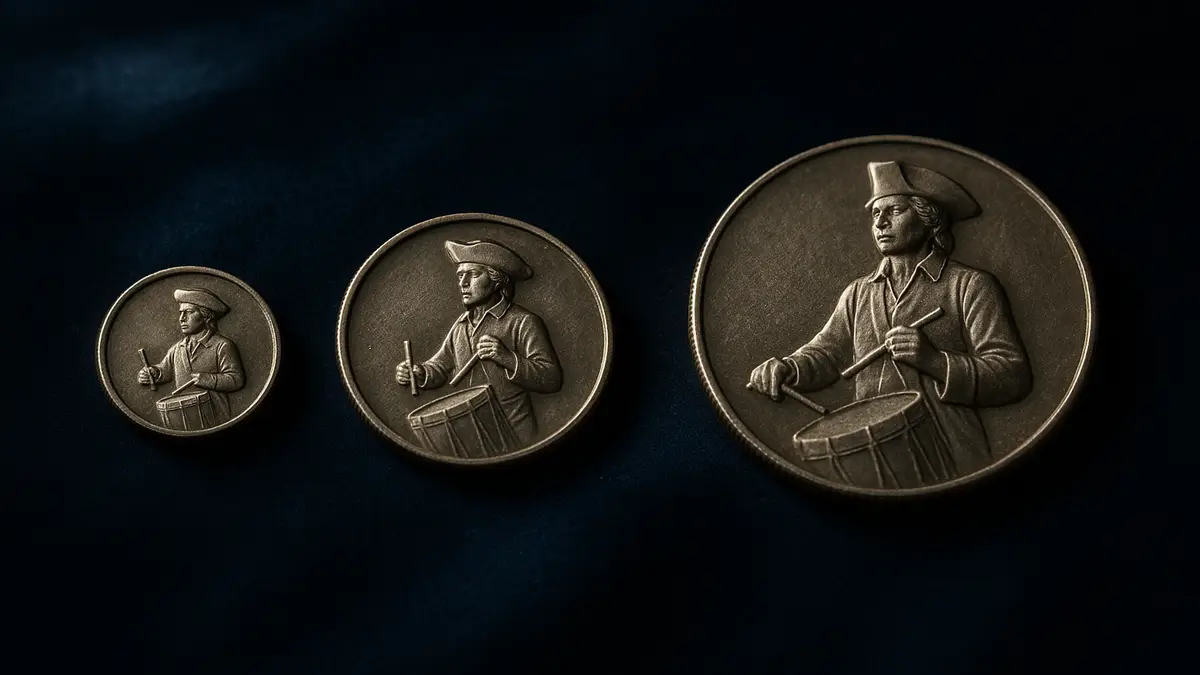
Three denominations got a special look for the country’s 200th birthday in 1976: the quarter, the half dollar, and the Eisenhower dollar. All three share a dual date, 1776-1976, and all three follow the same value pattern once you know where the real scarcity actually sits.
What made 1976 bicentennial coins different?
The US Mint gave the quarter, half dollar, and dollar new reverse designs for the anniversary: a colonial drummer on the quarter, Independence Hall on the half dollar, and the Liberty Bell superimposed against the moon on the dollar. All three carry the 1776-1976 dual date instead of a plain 1976, and coins with this design were struck during both 1975 and 1976, so there is no separate 1975-dated version of any of the three.
Is a bicentennial quarter, half, or dollar silver?
Almost never in ordinary circulation. The vast majority of bicentennial coins are the same copper-nickel clad composition used on every other quarter, half dollar, and Eisenhower dollar from that era, with no silver at all. Alongside that circulating run, the mint also struck a limited number of 40% silver versions of all three denominations, sold exclusively in sealed proof and uncirculated three-coin sets directly to collectors. Those silver sets never entered circulation, so a coin pulled from actual pocket change is essentially certain to be the ordinary clad version.
What is a bicentennial coin worth?
| Coin | Composition | Typical value |
|---|---|---|
| Quarter, clad | Copper-nickel, no silver | Face value-$1 uncirculated |
| Quarter, 40% silver (collector set only) | Silver-clad | $10-$20 depending on grade and packaging |
| Half dollar, clad | Copper-nickel, no silver | Face value |
| Half dollar, 40% silver (collector set only) | Silver-clad | $10-$20 depending on grade and packaging |
| Dollar, clad (Eisenhower) | Copper-nickel, no silver | Face value-$2-$3 |
| Dollar, 40% silver (collector set only) | Silver-clad | $10-$20 depending on grade and packaging |
These are collector-market ranges, not investment advice. The complete three-coin silver set in its original government packaging typically commands more than the sum of the three coins priced separately, since the packaging and completeness matter to collectors of these sets specifically.
How do you tell a silver bicentennial coin from a clad one?
Do not rely on color or a quick edge glance the way you would with a 1964 quarter. The 40% silver alloy used in these sets is itself a clad sandwich, not solid silver, so the visual cues are subtler and easy to misread. The far more reliable signal is where the coin came from. If it arrived in original mint packaging, a sealed proof set or uncirculated set purchased directly from the US Mint or passed down that way, it is worth checking the set type before assuming it is common clad. If it came from a bank roll, a cash register, or an old coin jar with no packaging, it is almost certainly the standard clad version, since the silver sets were never released for circulation in the first place.
Are bicentennial coins rare?
No, not as a category. The whole point of the design was a circulating commemorative that ordinary Americans would encounter in daily change, so the mint struck hundreds of millions of clad quarters, halves, and dollars carrying the 1776-1976 date. That volume is exactly why most bicentennial coins found today are worth close to face value. The silver sets are a genuinely smaller, separately tracked production run, which is where any real premium in this coinage actually lives.
How does the bicentennial dollar connect to the rest of the Eisenhower series?
The bicentennial reverse appears only on Eisenhower dollars dated 1776-1976, sitting inside the broader 1971-1978 Eisenhower dollar run. Our Eisenhower dollar value guide covers the rest of that series, including how to tell the clad and 40% silver versions apart across every year, not just the bicentennial ones.
Which bicentennial coin is hardest to find in everyday change?
Not the quarter or the half dollar, both of which circulated normally and still turn up in ordinary transactions. The Eisenhower dollar as a whole, bicentennial reverse included, saw limited use in day-to-day spending, since a large, heavy dollar coin was not something most people wanted to carry or businesses wanted to make change with. That makes a circulated bicentennial dollar somewhat less common to stumble across than a bicentennial quarter or half, though it is still far from scarce in the collector sense; enough were struck and saved in bank rolls and mint sets that supply remains healthy.
Should you clean a bicentennial coin before selling it?
No. Cleaning, even a gentle rinse or polish, leaves fine marks on the surface that an experienced buyer spots immediately, and it typically lowers the price rather than raising it, especially on the 40% silver examples where surface preservation is a real part of the value. If a bicentennial coin looks dull or toned, leave it alone. A coin’s original surface, even a dull one, is worth more to a serious buyer than a shiny one that has clearly been altered.
Where should you check next?
If the bicentennial half dollar sent you looking at the wider Kennedy half series, our Kennedy half dollar value by year guide covers every composition change from the 1964 90% silver issue through today’s clad coins. Once you know which bicentennial coins you actually have, our guide to selling old coins covers realistic options for a mixed group of clad and silver-set pieces, since they usually sell best through different channels.
Frequently asked questions
Quick answers to what readers ask us most
What is a 1976 bicentennial quarter worth?
A common clad example is worth face value to about $1 uncirculated. The 40% silver version, sold only in collector sets and never circulated, is worth more, generally in the $10-$20 range depending on condition and whether it is still in its original packaging.
Why do bicentennial coins say 1776-1976 instead of just 1976?
The US Mint used a dual date on the quarter, half dollar, and dollar to mark 200 years since independence. Coins with the special reverse design were struck during both 1975 and 1976, but all of them carry the 1776-1976 date rather than a separate 1975 date.
Are bicentennial coins rare?
No, not the clad versions. Hundreds of millions were struck for circulation as part of the anniversary, so a bicentennial quarter, half, or dollar found in change is common. Rarity applies mainly to the collector-only silver sets in high grade with original packaging intact.
How can I tell if my bicentennial coin is silver?
Context is more reliable than color. The 40% silver versions were sold exclusively in sealed proof and uncirculated sets directly to collectors and never released into circulation, so a bicentennial coin that came from pocket change or a bank roll is almost certainly the ordinary clad version.