
1945 Wheat Penny Value: Rare Dates and What to Look For
A 1945 wheat penny is common but still worth checking. See typical values by mint mark and color grade, and how 1945 differs from 1943 and 1944 cents.
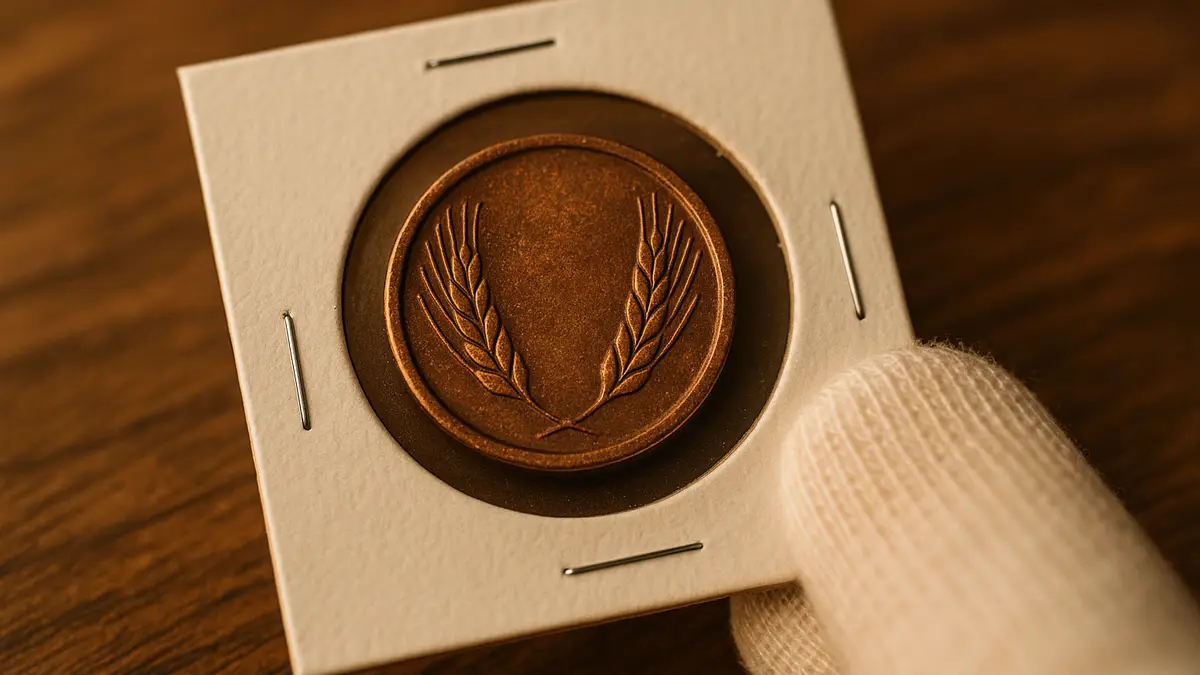
A 1945 wheat penny is one of the most common coins anyone finds while sorting old change, and that is exactly why it is worth a fast, honest look instead of a hopeful one. It will not make anyone rich, but it is worth more than a modern cent, and knowing why helps you spot the pennies nearby that actually are scarce.
Is a 1945 wheat penny worth anything?
Yes, modestly. A worn, common 1945 wheat penny typically sells in the $0.05 to $0.15 range, which is still several times face value even if it will not fund anything on its own. An uncirculated example that kept its original bright copper color can bring $1 to $3, and that gap between circulated and uncirculated is the real story with this date.
The reason 1945 stays inexpensive is mintage volume. All three US mints running that year, Philadelphia, Denver, and San Francisco, struck large numbers of cents to meet wartime and postwar demand, so surviving examples are easy to find in any condition.
What makes 1945 different from the other wartime pennies?
1943 is the odd year out in this stretch: cents were struck in zinc-coated steel that year because copper was needed for the war effort, which is why a 1943 cent looks silver instead of copper. Our 1943 steel penny guide covers that year and the rare bronze error pieces that slipped through.
By 1944, the mint returned to a copper-based alloy, but 1944 through 1946 cents were struck from recycled shell-case brass rather than the prewar bronze formula, since brass from spent ammunition casings was available in bulk. The visual difference from a standard bronze cent is negligible to the eye, so this detail affects composition history more than it affects price.
What is a 1945 wheat penny worth by mint mark and grade?
| Mint mark | Location | Typical circulated value | Typical uncirculated (red) value |
|---|---|---|---|
| None | Philadelphia | $0.05-$0.10 | $1-$2 |
| D | Denver | $0.05-$0.10 | $1-$2 |
| S | San Francisco | $0.05-$0.15 | $1.50-$3 |
These are collector-market ranges, not investment advice, and they shift with overall demand for common-date wheat cents. The San Francisco strike sometimes brings a small premium in top uncirculated grades, but the difference across mint marks stays modest for this particular year.
What does the color grade mean for a copper penny?
Copper cents are graded on wear and on color, since copper tones from bright orange-red toward brown as it ages and reacts with air. Graders use three labels: Red (RD) for a coin that kept close to its original mint color, Red-Brown (RB) for a coin partway through toning, and Brown (BN) for a coin that has fully toned. A 1945 wheat penny in Red condition can be worth two to three times the same coin graded Brown, even when the actual wear level is identical, which is why color matters as much as the grading scale itself.
Are there any known errors on 1945 wheat pennies?
No widely documented doubled-die or major error variety is associated specifically with 1945, unlike the 1943 bronze cent or the far more famous 1955 doubled die cent. That does not rule out minor die varieties or off-center strikes turning up occasionally, since minting errors happen in small numbers across most years. If a 1945 cent looks unusual, doubled lettering, a shifted design, or an obviously different planchet, it is worth a second look before you assume it is just a common date.
Which wheat pennies are actually the rare ones?
Since 1945 is not a key date, it helps to know which years are. The wheat cent series runs 1909 to 1958, and within that run a handful of dates stand well above the rest: 1909-S VDB (the first-year San Francisco strike with the designer’s initials, pulled from production almost immediately), 1914-D, 1922 with no mint mark (a Denver-only year where some dies wore down enough to look mint-mark-free), and 1931-S. Those dates were struck in low numbers relative to the rest of the series, and low mintage is what actually creates scarcity, not age by itself. A 1945 cent, by contrast, was struck in the tens of millions across three mints, which is exactly why it stays inexpensive even in decent condition.
Knowing this short list saves time. If a jar of wheat cents does not include one of the genuine key dates, the fastest path to value is sorting by condition and color rather than hunting for a date that is not there.
How do you quickly identify a wheat penny in the first place?
Flip the coin to the reverse side. Wheat cents show two stylized wheat stalks curving around the rim with ONE CENT centered between them, which is where the series gets its name. Every cent minted from 1959 onward switched that reverse design to the Lincoln Memorial, so the wheat-stalk reverse alone tells you the coin falls somewhere in the 1909-1958 range before you even check the date.
Where does a 1945 wheat penny fit in the bigger picture?
If you have a jar of wheat cents rather than a single coin, working through them by date is faster with our wheat penny value by year guide, which charts the full 1909-1958 run and flags which years to actually slow down on. Once you have sorted the common dates from anything unusual, our guide to selling old coins covers realistic options for a full jar versus a single valuable find, since the two situations call for different approaches.
Frequently asked questions
Quick answers to what readers ask us most
Is a 1945 wheat penny rare?
No. 1945 was a high-mintage year at all three mints that struck cents that year, so a 1945 wheat penny in circulated condition is common and worth only a small amount above face value. Rarity in the wheat cent series belongs to a small set of other dates, not 1945.
What is a 1945-S or 1945-D wheat penny worth?
About the same as a plain 1945 cent from Philadelphia in most grades. All three mints produced large quantities that year, so the mint mark does not create a meaningful price gap for typical circulated examples.
Why do some 1945 pennies look brighter than others?
Copper cents tone over time from bright orange-red toward brown, and collectors grade that color separately from wear. A coin that kept its original mint color is worth more than an identically worn coin that has toned brown.
Is a 1945 penny made of the same metal as a 1943 penny?
No. 1943 cents are zinc-coated steel because copper was needed for the war effort. By 1945 the mint had returned closer to a standard bronze-style alloy, though 1944 through 1946 cents used recycled shell-case brass rather than the exact prewar formula. See our 1943 steel penny guide for the full story.